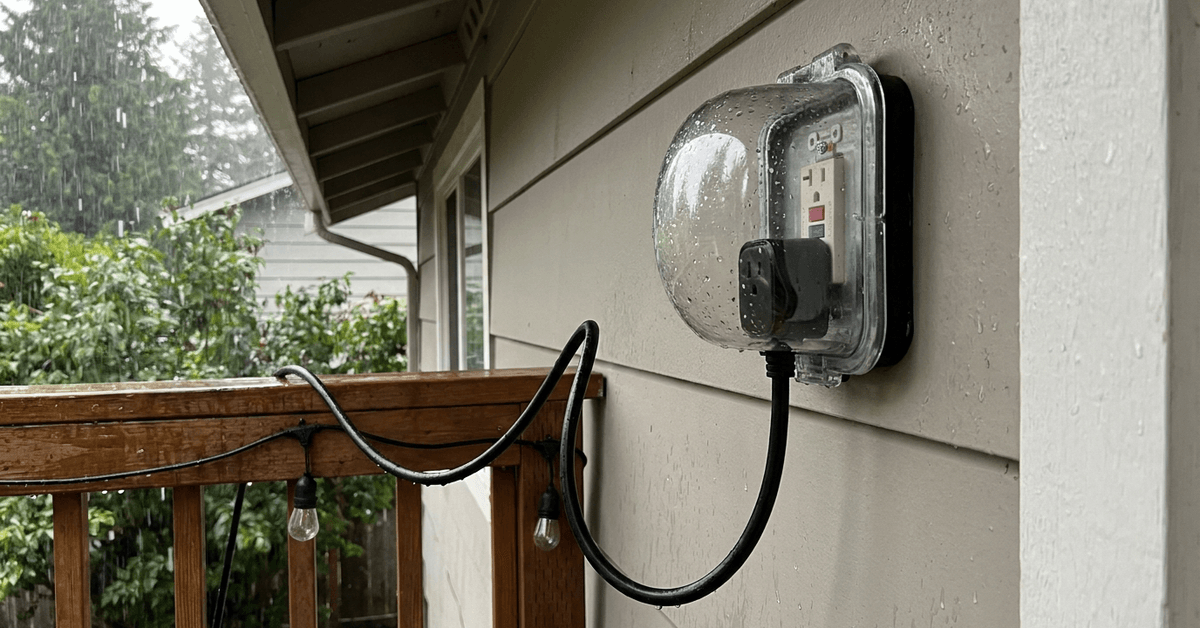
Even plugs rated for outdoor use can develop issues if water gets inside or sits around electrical connections for too long.
Homeowners who rely on smart automation for garden lights, security cameras, or water features often find it challenging to keep outdoor outlets reliable when the weather gets stormy.
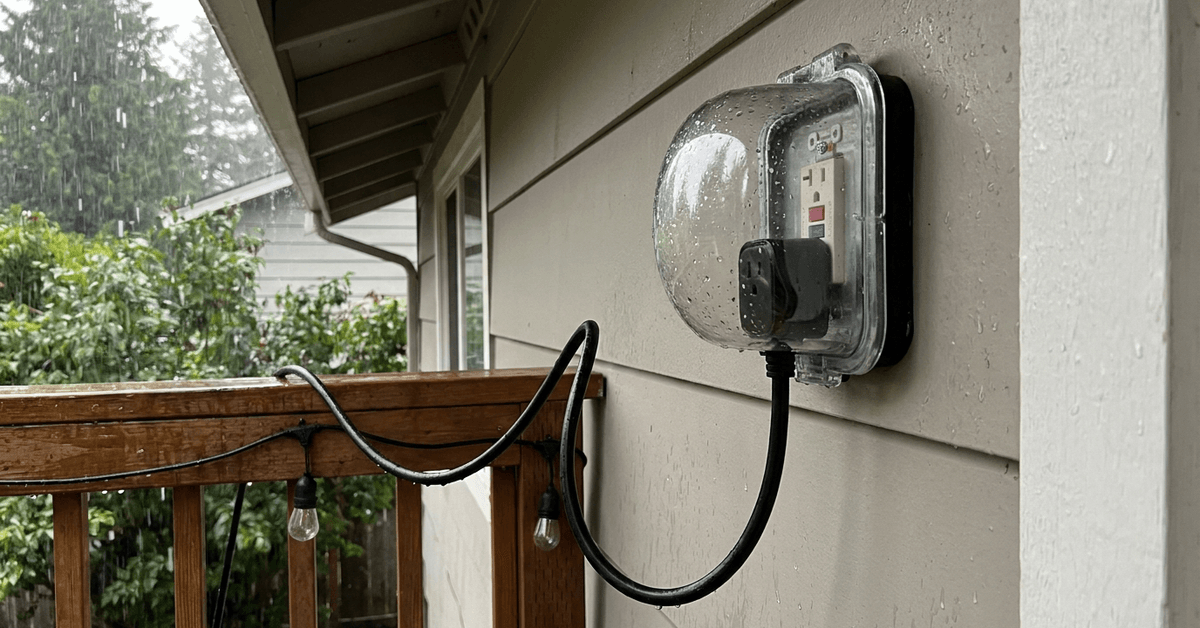
This guide covers practical, real-world techniques for keeping your smart plugs safe, ensuring your smart home remains functional and secure—rain or shine.
Why Outdoor Smart Plugs Need Protection?
Outdoor smart plugs face harsh weather conditions, but heavy rain is especially risky.
If water enters the casing or connectors, short circuits and corrosion can occur.
The result? Automation failures, false notifications, or costly device replacements.
Choose the Right Weatherproof Smart Plug
Not all outdoor smart plugs offer the same protections or certifications.
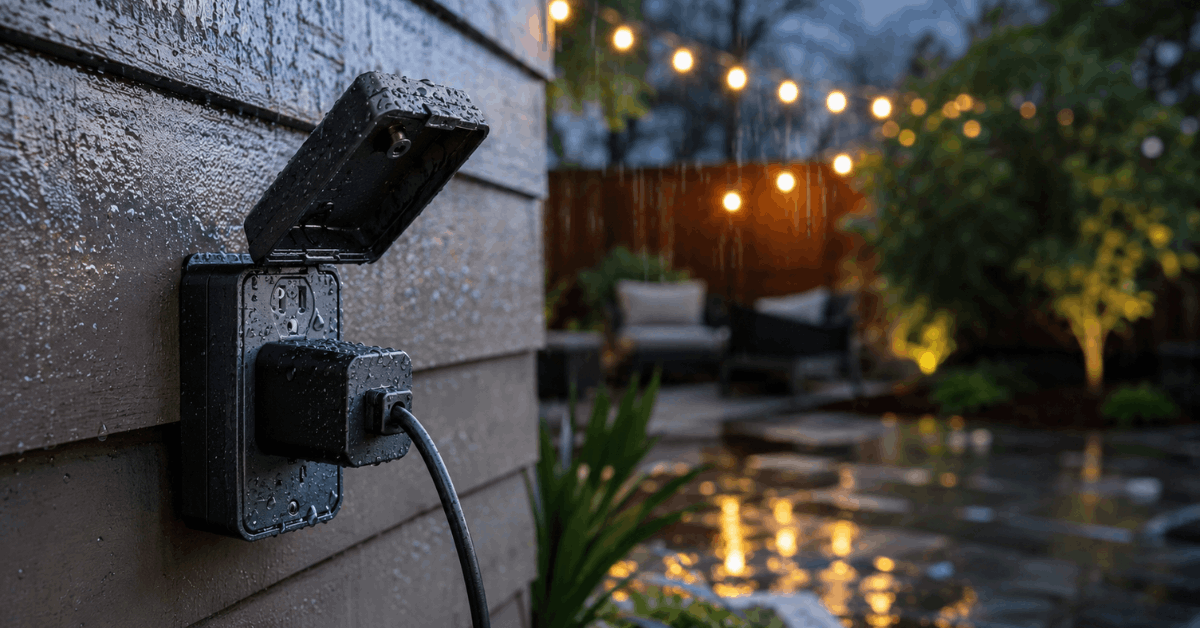
Looking for an IP65-rated smart plug gives you the best barrier against rain intrusion.
- IP65-rated means protection from water jets and major rainfall.
- Plugs rated lower, such as IP44, are more vulnerable to constant exposure.
Shelly, TP-Link, and Meross are brands known for solid weatherproofing.
Location matters: Placement Tips for Maximum Rain Resistance
A well-chosen plug location can make all the difference.
- Position the smart plug under a roof overhang or sturdy awning.
- If possible, use the underside of a deck or balcony as extra cover.
Direct exposure to falling rain is one of the key causes of failure, regardless of plug rating.
Mounting the plug vertically, with the outlets facing down, can also help reduce runoff collecting on the plug face.
Outdoor Plug Covers: Extra Peace of Mind
While weatherproof plugs are essential, an additional outdoor outlet cover offers another defense layer.
- Bubble covers are designed to enclose both the plug and actual smart device in use.
- These covers snap securely around the outlet without gaps for rainwater to seep inside.
Home improvement stores like Home Depot and Lowe’s stock models sized for larger smart plugs.
Cable Management for Water Control
Dangling smart plug cords or extension leads can draw rainwater into devices through capillary action.
- Securing cables in a gentle downward curve away from the plug reduces the risk.
- Water follows gravity; a U-shaped ‘drip loop’ below the plug lets moisture drip harmlessly before reaching electronics.
Cable ties and outdoor clips are handy for keeping wires in position.
Sealing Connections and Entry Points
Even with waterproofing, joints between plug and extension cord are common leak points.
A weatherproof silicone gasket or rubberized sealing sleeve can help add protection.
- Some products create a watertight seal where cords meet, reducing internal moisture.
- Select sleeves rated for outdoor electrical use and compatible with your plug size.
An additional step is to regularly inspect and re-seat fittings, especially after storms.
Effective Smart Plug Setup: Network Stability in Wet Conditions
Rain not only affects hardware, but can weaken Wi-Fi or Zigbee signals if water pools around antennas or housing.
For reliable performance in rain-prone areas, consider a plug that supports both Wi-Fi and Bluetooth fallback, such as the TP-Link Kasa Outdoor KS200 .
- Dual-band Wi-Fi plugs often remain online better during variable weather.
- Mesh Wi-Fi systems (like Google Nest Wifi or Eero) help maintain signal through thick outdoor walls or wet foliage.
Homeowners sometimes overlook the wireless side, but connectivity is vital for automation to work smoothly in a wet climate.
Monitoring and Alerts: Smartphone Apps and Automations
Most smart plugs pair with mobile apps, offering notifications if the device disconnects.
- Apps like Kasa Smart and Meross let you schedule plug activity and check connection status remotely.
- Setting up push alerts for offline events provides an early warning of potential water ingress or cable trouble.
For wider home integration, SmartThings, Home Assistant, or Apple Homekit can monitor plug health along with other devices.
Preventive Maintenance: Routine Checks and Cleaning
Regular inspection stops minor issues from turning into major outages.
- Every one or two weeks, glance at the plug to spot any watermarks or corrosion near the prongs.
- If dirt accumulates, unplug and wipe the housing dry before reconnecting.
A spray of contact cleaner designed for outdoor electricals maintains safe conductivity and stops rust on contacts.
Alternative Solutions: Smart Outdoor Outlet Enclosures
For extreme climates or especially vulnerable installations, an outdoor enclosure box is a more permanent safeguard.
- Polycarbonate or ABS plastic boxes can surround plugs and power strips completely, locking out rain and snow.
- Ventilation grids help avoid overheating from larger smart plugs that run year-round.
Installation is straightforward—enclosure boxes are simply mounted to the wall and sealed around cable entry points.
Legal and Safety Reminders For Outdoor Electricals
Outdoor smart plug wiring should always comply with local electrical codes.
GFCI (Ground Fault Circuit Interrupter) outlets add a vital safety buffer against electrical shock in wet environments.
If unsure, a licensed electrician might offer the safest assessment, especially if installing multiple plugs or heavy-load outdoor devices.
Conclusion: The Best Defense is Layered Protection
Smart homes increasingly depend on weatherproof smart plugs and reliable automation outdoors.
By choosing high-IP-rated plugs, installing robust covers, sealing all cable joints, and managing location wisely, homeowners can significantly reduce risk from even the heaviest rainstorms.
Some may find that routine checks and smart monitoring apps offer peace of mind that their tech is working—especially during unpredictable weather.
No single solution works for every yard or patio, but combining these techniques creates redundancy and helps keep outdoor smart plugs secure through many rainy seasons to come.