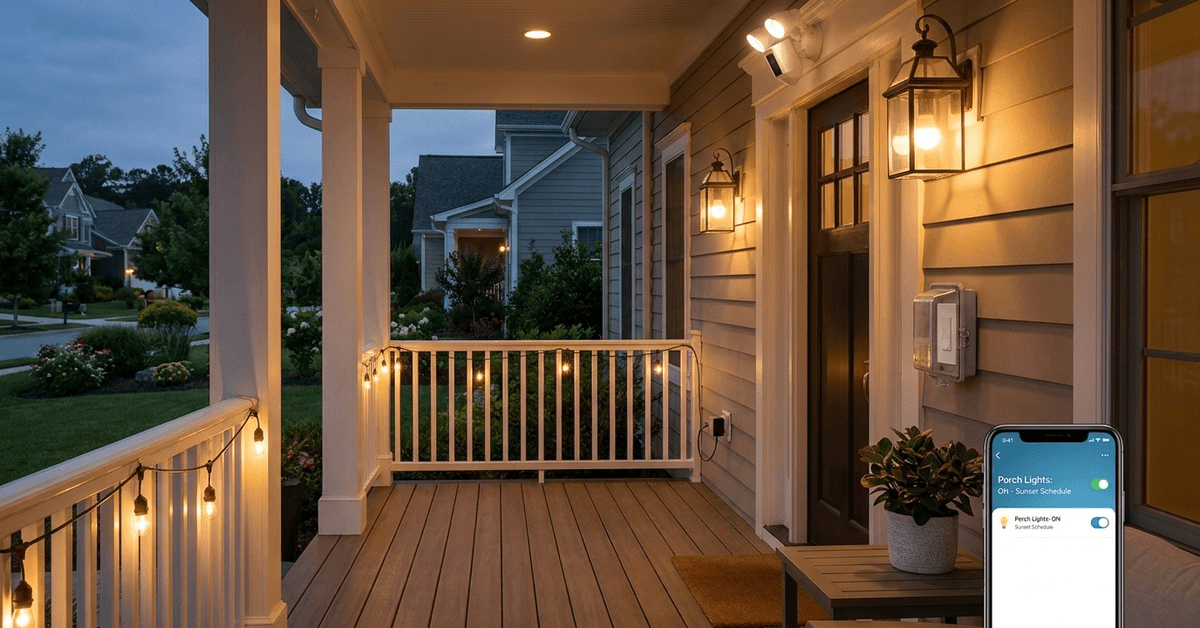
Automated porch lighting creates a welcoming atmosphere all night. For many, its main benefit comes from the added security it brings to a home’s entrance.
Motion-activated light discourages unwanted visitors. At the same time, it makes daily tasks like unlocking doors at night much easier.
Types of Automated Porch Lighting Solutions
Smart Bulbs
A straightforward introduction is to begin with Philips Hue bulbs. They connect with most major platforms like Alexa or Google Home.
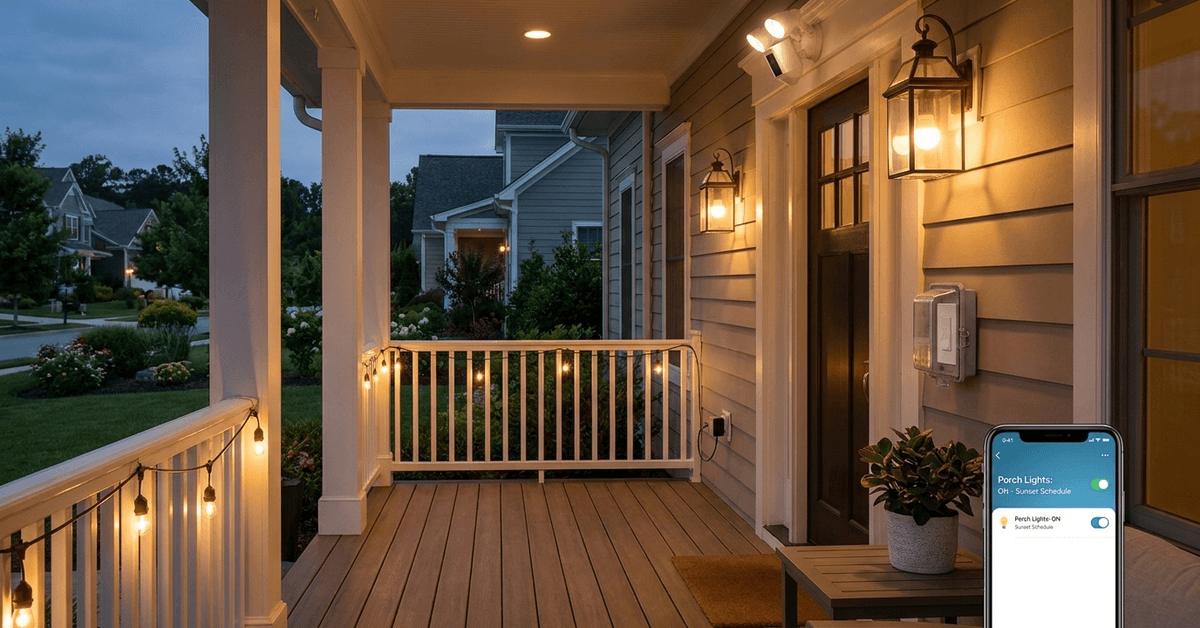
Users can schedule on and off times via an app. Customization options are plentiful, though the upfront cost may seem a little high for some.
Smart Light Switches
Another practical alternative is using Lutron Caseta smart switches. These allow for smart control of existing porch lights without changing the bulbs.
Reliability is a key advantage. Integration with other smart systems feels seamless once connected.
Outdoor Smart Plugs
Kasa Outdoor Smart Plug is a commonly chosen device for porch lighting. It works well with string lights or lamp fixtures plugged into outdoor outlets.
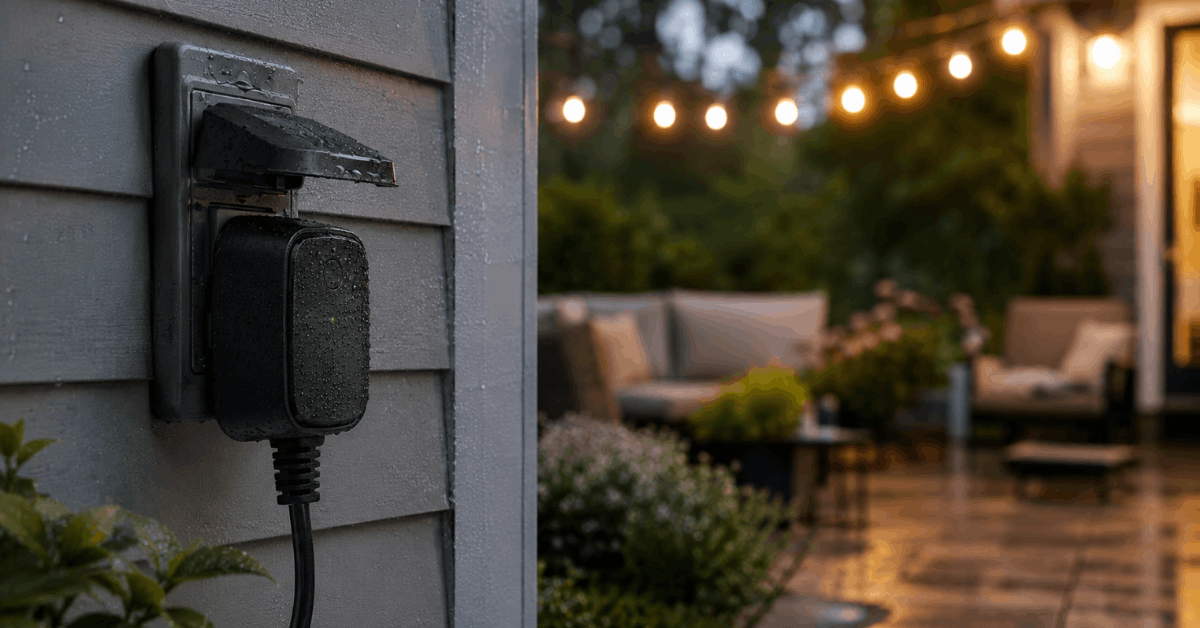
Direct app control and timer settings are included. It’s perhaps the most flexible choice for renters or temporary setups.
Dedicated Motion Sensor Lights
Specialized fixtures, such as the Ring Floodlight Cam , combine powerful illumination and video monitoring. Motion triggers recorded footage and bright light automatically.
The electrical installation might be a bit more advanced. Pre-existing wiring makes the job easier for most DIY homeowners.
Key Communication Protocols Explained
Wi-Fi Control
Devices like smart bulbs and plugs often use Wi-Fi for connectivity. Wi-Fi is familiar, but it can add network congestion if several devices are active together.
Setup typically requires a mobile app and a steady signal near the porch. Range extenders sometimes make a difference in reliability.
Zigbee and Z-Wave
Many smart switches, including Z-Wave or Zigbee models, operate with lower frequency radio protocols. These enable devices to talk to each other directly.
Z-Wave and Zigbee form mesh networks, extending signal strength with every compatible device. Homeowners looking for large setups might prefer this approach.
Bluetooh-Based Control
Some budget-friendly porch lighting options use Bluetooth pairing with a smartphone. Range is more limited here, but it reduces Wi-Fi dependency.
This method is simple to use. In practice, it often works best for small entryways.
Step-by-Step: Installing a Smart Porch Light
Gathering Essential Tools
- Screwdriver
- Wireless-enabled bulb, switch, or plug
- Mounting hardware (for fixtures)
- Your chosen smart home app
- Stable home Wi-Fi or hub if required
Connecting Your Device
- Turn off the power to your porch light from the main circuit breaker.
- Install the new smart device according to the manufacturer’s manual.
- Restore power and ensure the fixture switches on as expected.
- Download the companion app or use your existing smart home platform.
- Following in-app prompts, pair the device to your Wi-Fi, Zigbee, or other chosen protocol.
Customizing Schedules and Scenes
- Within the app, set schedules for dawn and dusk operation if desired.
- Use motion detection settings for more advanced setups.
- Consider grouping porch lights into “scenes” with other devices for larger routines.
Best Apps and Platforms for Porch Lighting Automation
Apple HomeKit
HomeKit brings secure control to iPhone users. It integrates porch lighting scenes with automations like geofencing.
Homeowners anchored in the Apple ecosystem often feel it offers crisp simplicity and stability.
Google Home
Google Home allows seamless integration of timers, triggers, and voice commands. Routines can include prompts such as “Turn porch lights off when everyone leaves.”
Those already using Nest cameras or Google Assistant smart speakers will find this process especially intuitive.
Amazon Alexa
With Alexa , creating routines is very flexible. Porch lights, doorbell cameras, and announcement features work together for total awareness.
Some prefer Alexa for its customizable voice command system and wide device compatibility.
Samsung SmartThings
SmartThings excels at mixing Zigbee, Z-Wave, and Wi-Fi gadgets on one dashboard. Automations like “if motion detected, turn on light” are quick to build.
Owners of multiple brands often lean toward SmartThings for cross-compatibility.
Basic Security and Privacy Guidelines
Strong passwords and device updates are essential steps. Each branded app provides security updates, so turning on auto-update is recommended.
For many, enabling two-factor authentication adds obvious peace of mind. Always pick trustworthy brands to avoid privacy breaches.
Common Troubleshooting Points
- If a device fails to connect, double-check Wi-Fi or hub proximity. Metal siding can interfere with the signal at entrances.
- When lights turn on or off at unintended times, review automation rules for overlaps or errors.
- If scheduling fails in the app, syncing device firmware often fixes glitches.
Legal and Safety Reminders
Electrical projects should always comply with local building codes and regulations. When in doubt, consider a licensed electrician for installation.
Secure all outdoor wiring in weatherproof housing to prevent hazards. Reliable brands publish installation guides with regional safety tips included.
Conclusion
Automated porch lighting does more than boost security—it lifts daily convenience and comfort, too. There are multiple starting points, from bulbs to smart switches, suited for all homeowner tech levels.
Key protocols—such as Wi-Fi, Zigbee, and Z-Wave—extend flexible setup options. For peace of mind, secure smart lights with strong passwords and regular updates.
Once the system is in place, smart porch lighting is mostly hands-off. The combination of enhanced safety, energy savings, and sheer ease justifies the upgrade for many modern households.