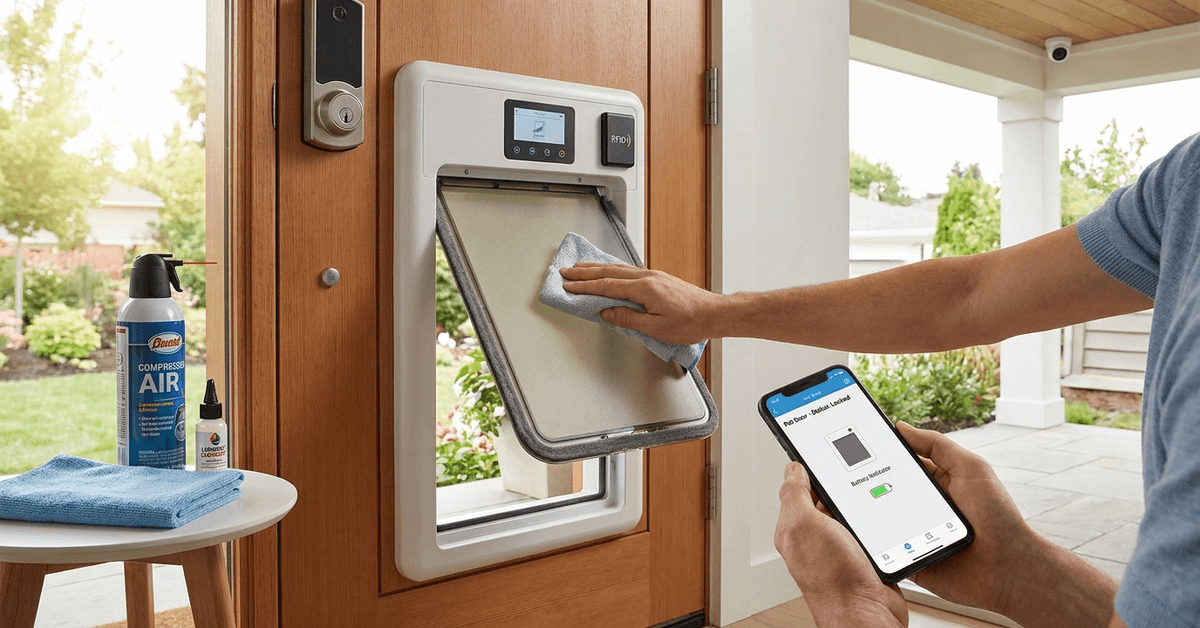
Automated pet doors add both convenience and security to smart homes. When maintained properly, they help keep pets healthy and homes secure. Many homeowners notice fewer scratches and broken screens too.
However, automated doors contain sensitive electronics, moving mechanisms, and weatherproofing features that need attention.
This article is for anyone who owns a smart pet door or is planning to upgrade, especially those interested in home automation safety. Here are proven steps to maintain them for optimal performance and safety.
Understanding Automated Pet Door Components
Modern automated pet doors are built with sensors, motors, microprocessors, and sometimes Wi-Fi modules. Some models interface with smart home apps for added control.
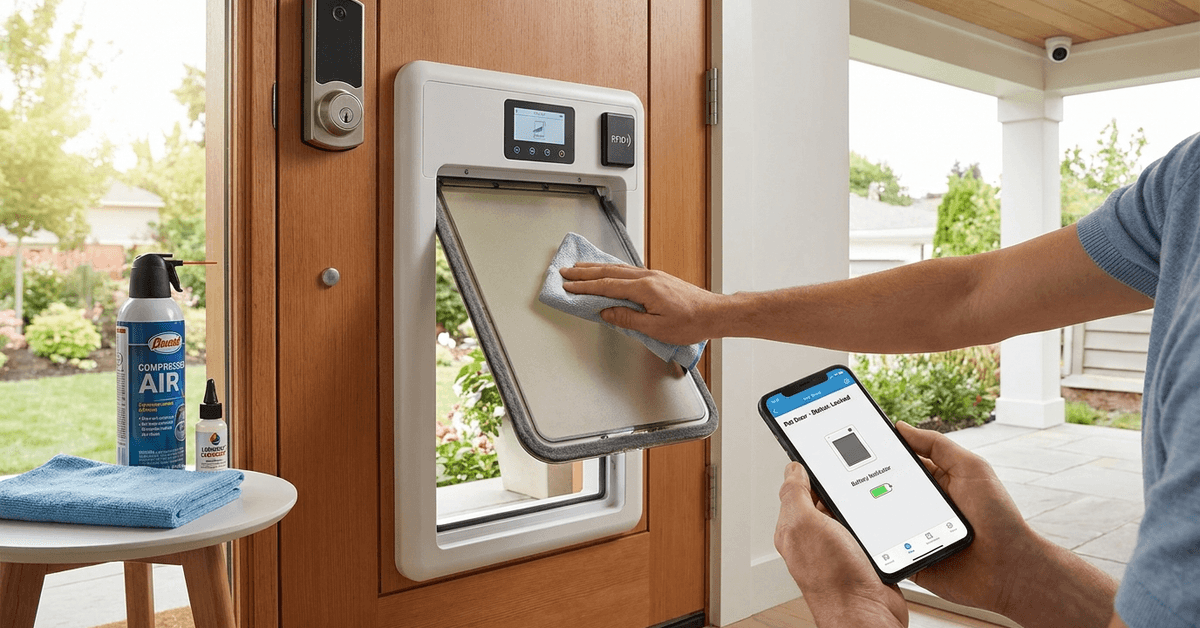
Key Components Include:
- RFID/Chip Reader for identifying pets accurately
- Secure locking mechanism to prevent unwanted entry
- Motorized flap or sliding panel
- Backup battery system (optional)
- Water-resistant housing and weather seals
Familiarity with these parts helps in spot-checking or troubleshooting minor issues before they become bigger.
Routine Inspection and Cleaning Protocols
Consistent inspection keeps doors operating smoothly. Basic cleaning also reduces wear on mechanical parts.
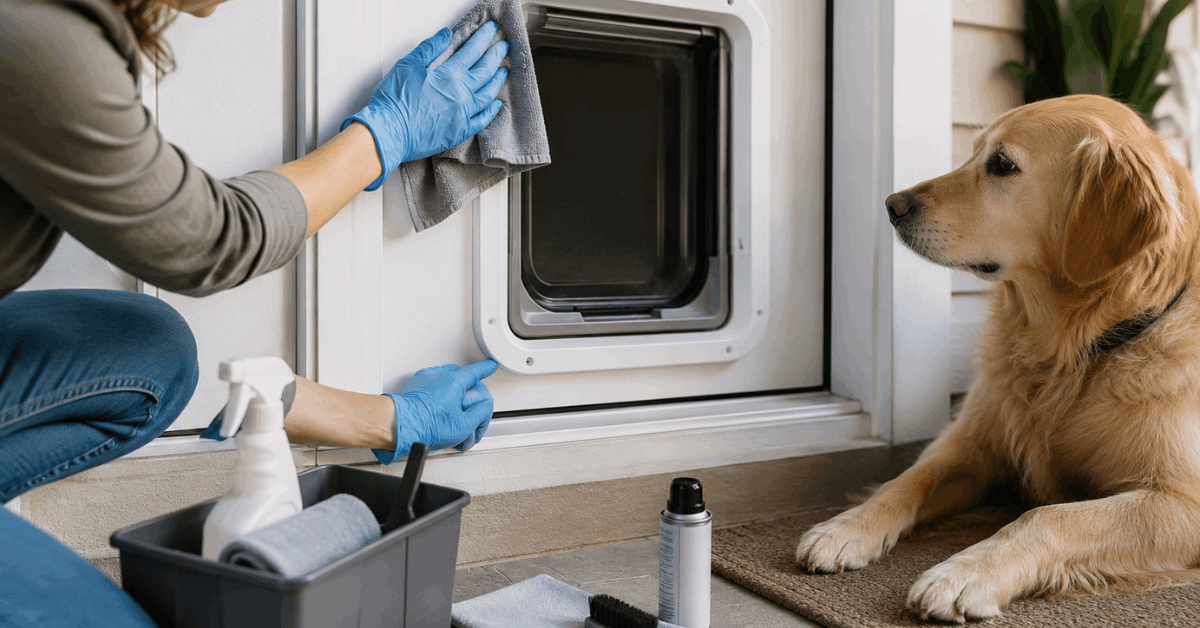
Weekly Visual Inspection
- Check for stuck debris or hair around moving parts
- Ensure the flap or panel closes flat against the seal
- Test that the locking mechanism engages fully
Monthly Deep Cleaning Guide
- Use a soft microfiber cloth to wipe all accessible surfaces
- Non-abrasive cleaner is ideal for the pet interface area
- Compressed air helps dislodge hair in crevices
- Silicone lubricant on hinges ensures smooth movement
- Check and gently press on all weather seals for flexibility
Most damage comes from trapped dirt, so quick cleaning can really preserve sensitive tech over the long run.
Safety Checks for Electronic and Smart Features
Functional electronics are the key to security. Regular checks prevent accidental lockouts or system failure.
Battery and Power Supply Review
- Look at battery levels monthly (usually displayed in the mobile app or on-unit LEDs)
- Replace or recharge the power supply as needed to avoid downtime
Testing RFID and Microchip Readers
- Use each registered pet’s collar tag or microchip to trigger entry/exit at least once monthly
- Watch for lag or failed signals, which might indicate sensor wear or interference
Smart Home Integration Verification
- Open the compatible app (such as Sure Petcare for SureFlap models) to check event logs
- Try remote locking/unlocking if your model supports Wi-Fi connectivity
- Be sure the device firmware is current, usually via notification in the pet door app
Tracking app logs can reveal minor issues before pets are inconvenienced by a locked door or a disconnection.
Weatherproofing and Environmental Adaptation
Pet doors are exposed to a range of weather. Safeguarding components from rain, wind, and sun helps maintain integrity.
Inspecting Seals and Flaps
- Look for signs of cracking, stiffness, or gaps along the weather seals weekly
- Replace any worn flaps using official parts from the manufacturer
Moisture Mitigation Strategies
- Install a small overhead canopy outdoors if rain is frequent
- Check that the sensors remain dry even during storms by touching and visually inspecting the reader
Poor weatherproofing is a common cause of sensor issues and rust on metallic parts.
Preventing Pet Door Security Risks
Security is a major reason homeowners use automated pet doors. Regular protocols help protect against unwanted entry.
Lock Function Reliability
- Verify that the auto-lock engages fully after each pet’s use
- Review the locking schedule or auto-close timer in the app settings
Credential Management Practices
- Remove lost or outdated RFID tags from the access list in your pet door app
- Reset credentials whenever a pet goes missing, just as a precaution
Firmware and App Updates
- Enable auto-updates if possible (often found in the app/system menu)
- Monitor brand websites like PetSafe or Sure Petcare for urgent security advisories
Maintaining updated software and rotating access tags are real-world steps to reduce risk while keeping daily routines easy for pets.
Software, Monitoring, and Mobile App Tips
Smart pet doors rely on apps and cloud platforms. These apps provide control, monitoring, and diagnostic features right from any device.
Essential Apps and Portals
- My PetSafe App (for PetSafe doors) – manages entry logs, scheduling, and battery levels
- Sure Petcare App – used for SureFlap models, allows remote monitoring, lock mode, and multi-pet assignment
- Manufacturer web portals for warranty and software status
Using App Logs to Detect Issues
- Review entry/exit logs monthly to catch abnormal patterns (such as repeated failed entries)
- Check for firmware update reminders after a system reboot
App notifications often catch overlooked problems before mechanical breakdowns occur.
Long-Term Care and Warranty Planning
Extended care increases longevity. Manufacturers differ in support and warranty coverage, so preparation is key.
Annual Maintenance Steps
- Schedule one full system reset per year following the manual
- Inspect all mounting surfaces and screws for shifting or loosening
- Note any noise changes or slowing motor sounds
- Contact manufacturer support for persistent warning signals (shown on the app or device LED)
Warranty Registration and Proof of Purchase
- Register new devices immediately using the manufacturer’s website
- Store digital receipts in a dedicated smart home folder (cloud storage is a safe bet)
Finding Spare Parts and Approved Installers
- Only use brand-recommended repair kits and parts for critical replacements
- Locate certified installers if major repairs are needed, especially for doors integrated into glass or high-security areas
This approach supports both hardware longevity and warranty claims in case of a future fault.
Conclusion
Automated pet doors can be a lasting, secure feature in any smart home if cared for with tailored, routine strategies. Regular checks on electronic systems, lock reliability, and weatherproofing give the most benefit.
Smart app use, timely software updates, and prompt attention to wear keep these devices safe and convenient for pets and families alike.
If maintenance feels overwhelming, manufacturer support and certified professionals are worthwhile and help extend the lifetime of your investment.