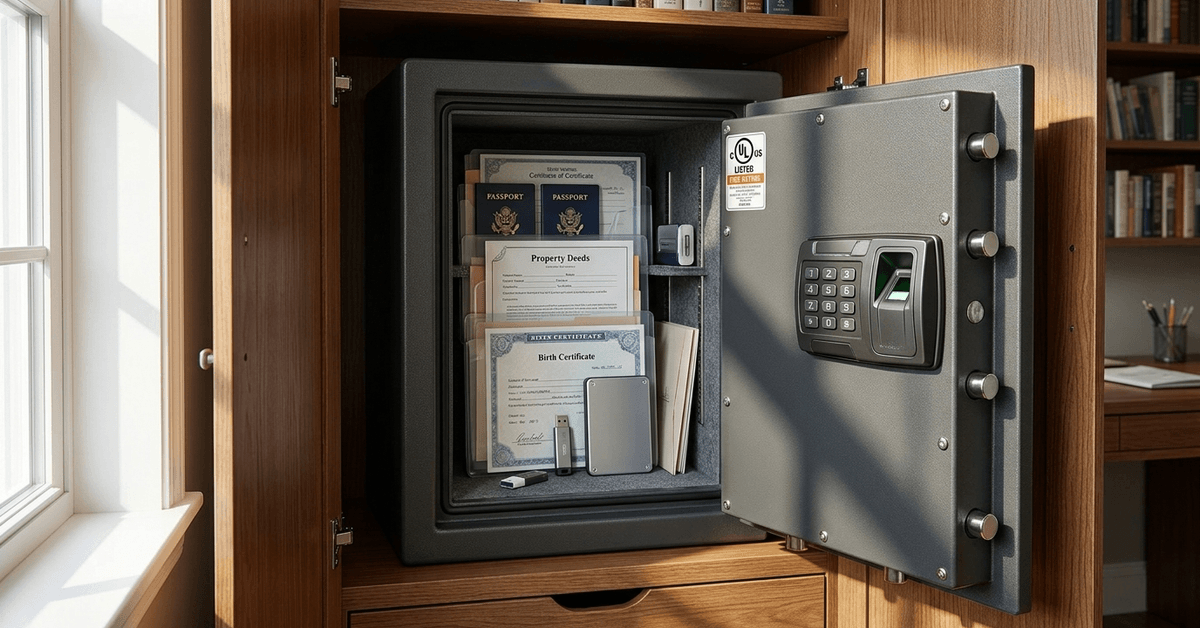
Safeguarding family documents from fire is a crucial step for any homeowner. Fireproof safes have evolved with smarter features to protect irreplaceable records, wills, or legal paperwork.
This guide is ideal for those who value secure home technology and seek reliable storage solutions for critical paperwork.
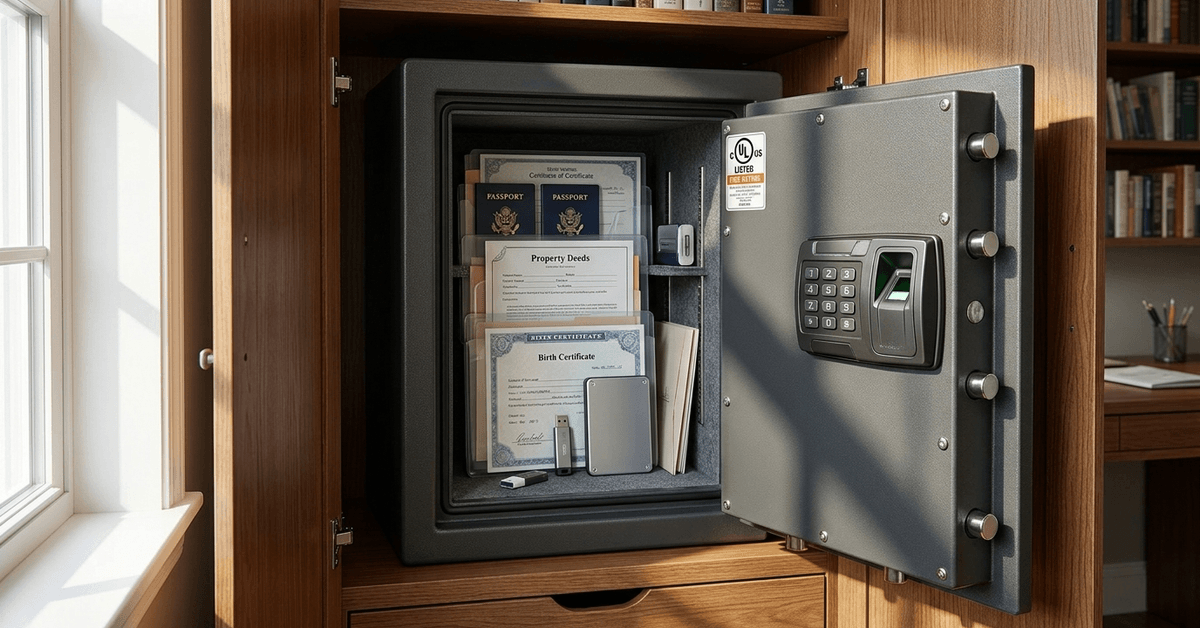
The right safe preserves your family’s future, even in the toughest situations. There’s satisfaction in knowing original documents stay protected, not just digitized.
Why Fireproof Safes Are Essential for Your Home?
Fire damage can be devastating, especially for documents that can’t be duplicated easily. Few people expect disaster, but it strikes without warning and puts vital records at risk.
What needs protection?
- Birth certificates
- Property deeds and titles
- Passports and ID cards
- Insurance policies
- Wills and legal files
- Financial records
Copies in the cloud help, but original documents often remain legally necessary.
How fireproof safes work?
These safes use insulation made from composite concrete or fire-rated steel panels. They create a barrier that keeps inside temperatures low enough to prevent document ignition during a fire emergency.
Most basic safes shield paper at up to 170°C (350°F)—the temperature at which documents begin to char.
Key Features to Consider in a Fireproof Safe
Understanding specific features can make a real difference in day-to-day security and reliability.
Fire rating
The UL fire rating is perhaps the most significant metric to check on a safe’s label. This rating explains the length of time, in minutes or hours, that the interior stays below 170°C in a fire.
Common ratings include 30 minutes, 60 minutes, and 120 minutes. Some high-end models go further, but these are rare in residential categories.
Internal capacity
Document boxes, binders, folders, or even portable drives—think practically about what you’ll be storing.
Larger safes offer extra space for backup data drives or small valuables. Yet, bulky units may be inconvenient if you have limited closet space.
Lock type and smart features
- Electronic keypad: Quick access, programmable codes, and often a backup key override.
- Traditional key: Reliable but can be lost or duplicated.
- Biometric scanner: Fast but battery-dependent and may require maintenance.
For simple setups, a robust electronic lock is usually reliable long-term. Smart home users often connect safes to Zigbee or Z-Wave systems, if supported by brands like Yale or SentrySafe.
Water resistance
Many house fires trigger sprinklers or fire hoses, which can flood the area. A water-resistant lining protects documents from both fire and secondary water damage. It’s an extra line of defense when disaster strikes.
Build quality and certifications
Steel gauge and dual-wall construction make a difference in durability. Reputable brands display independent certifications like UL (Underwriters Laboratories) or ETL (Intertek), signifying third-party tested performance. If you see a safe with “no certification,” it’s worth being cautious.
Installation and Setup: Best Practices
Safe installation matters almost as much as buying the right model.
Find the optimal location
- Basements are safe from high heat but may be prone to flooding.
- Bedroom closets keep safes accessible yet hidden from visitors.
- Consider wall or floor mounting for built-in security.
Choosing a central spot away from direct windows or damp walls limits the risk of heat exposure and water seepage.
Anchoring for theft prevention
Many safes include pre-drilled holes to secure them to floors or walls. Anchoring prevents quick theft and keeps the unit stable during earthquakes or accidental bumps.
- Use high-quality expanding anchors in concrete floors.
- When mounting to wood framing, choose lag bolts that are at least 2.5 inches long.
Some users mistakenly skip anchoring to finish setup quickly but regret this after a break-in or rough incident.
Smart notification setup
Select safes integrate with smart home hubs for tamper detection or access notifications.
Common compatible hubs include Samsung SmartThings and Hubitat Elevation. Configure through the manufacturer’s app or the smart hub dashboard:
- Add the device from your hub’s app (usually “Add device” or “Z-Wave/Zigbee device”).
- Enter the pairing mode on the safe, following the manual.
- Assign alert settings for door tampering or failed code attempts.
Test notifications after setup by triggering the safe’s tamper function for peace of mind.
Popular Brands and Recommendations
Choosing a proven brand increases the likelihood of performance matching the catalog listing.
Top 3 brands for home fireproof safes
- SentrySafe: Consumer-friendly, models with multiple certifications, widespread support.
- Honeywell: Reliable water and fire protection, solid build for document storage.
- Yale: Advanced electronic and smart safe options, including some that integrate with home automation protocols.
Sticking with well-known brands simplifies customer service and warranty coverage.
Additional shopping tips
- Check the UL and ETL certifications directly on the product label—not just the packaging or marketing materials.
- Reading third-party reviews can uncover any long-term reliability issues, which aren’t always visible in first-year use.
Professional locksmiths often recommend combination locks for low-maintenance setups, but smart locks are gaining ground in tech-forward homes.
Smart Storage for Digital Backups
Document safety extends beyond paper—USB drives and portable SSDs matter. Water and heat-resistant safes can protect both physical and backup media from disaster.
Recommended apps and tools
- Bitwarden: Secure password management for all digital storage passwords.
- Google Drive or Microsoft OneDrive: Cloud backup of scanned documents as a safety net.
- iStorage diskAshur: Hardware-encrypted drive for sensitive digital copies.
Homeowners often rely on this mix—physical safes for originals, and secure digital systems for backup and recovery.
Maintenance and Routine Checks
Neglecting upkeep can undermine the safety investment.
Test locks and batteries
Monthly tests for electronic or biometric systems catch failing batteries before they lock out access. If using a manual lock, lubricate it with graphite powder twice a year to prevent jamming.
Inspect seals and hinges
Visual checks of door seals and hinges ensure continued fire and water resistance. Lightly vacuum dust buildup from external vents or seams, especially in older homes or utility spaces.
Conclusion
Finding the right fireproof safe for important family documents does more than protect paper. It secures your legacy, provides rapid recovery resources in emergencies, and integrates seamlessly into a tech-forward smart home setup.
Modern options balance robust fire ratings, advanced locking mechanisms, and convenient digital integration for peace of mind. Regular checks ensure your investment keeps delivering security year after year.
With careful selection and routine maintenance, you create a truly safe space for your most cherished and vital records—no matter what life brings.