Backup batteries are essential for smart home reliability. Power outages, surges, or simple connectivity issues can disrupt automation if backup energy isn’t ready and safe.
Smart homeowners, tech enthusiasts, or anyone securing a digital lifestyle at home will benefit from learning effective battery storage methods. Proper storage keeps systems functional, prevents property risks, and even prolongs battery life.
Why Safe Battery Storage Matters for Home Tech?
Backup batteries power critical devices during outages. Improper storage can lead to malfunctions, overheating, or even fire hazards.
Many advanced home systems rely on battery backups: security cameras, smart locks, alarms, and network routers. Safe storage keeps these systems dependable.
Risks Associated with Poor Storage
- Short circuits and potential fires
- Reduced battery lifespan
- Voided warranty if manufacturer storage advice is not followed
- Damage to expensive electronics
Simple storage errors—like storing all battery types together—can be risky. Even forgetting temperature considerations can have consequences.
Understanding Types of Backup Batteries
The most common backup batteries in home setups are lithium-ion, alkaline, nickel-metal hydride, and sealed lead-acid types.
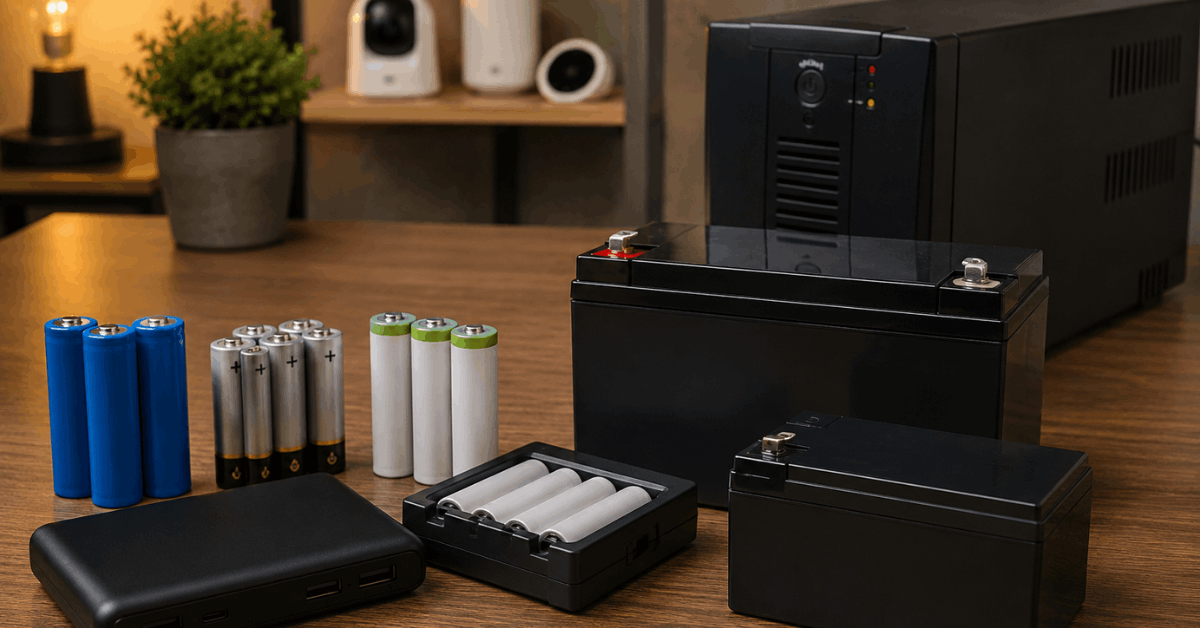
Each type has slightly different storage needs and safety protocols. In most smart home applications, lithium-ion batteries are the most common.
Lithium-Ion Batteries
Lithium-ion batteries are popular for compact devices. These need precise storage to remain safe and effective.
- Store in a cool, dry area away from direct sunlight
- Keep charge levels around 40% to 60% for long-term storage
- Use battery management apps like Battery Guru for real-time health monitoring
Alkaline Batteries
Alkaline batteries are often used for remotes, door sensors, and backup keypads.
- Store in original packaging or plastic containers
- Avoid storing in the device for extended periods
Nickel-Metal Hydride (NiMH) and Sealed Lead-Acid
NiMH batteries appear in rechargeable gadgets. Sealed lead-acid options can power larger UPS units.
- Store in a dry place with moderate temperature
- Lead-acid batteries should be stored fully charged and topped up every few months
Best Practices for Home Battery Storage
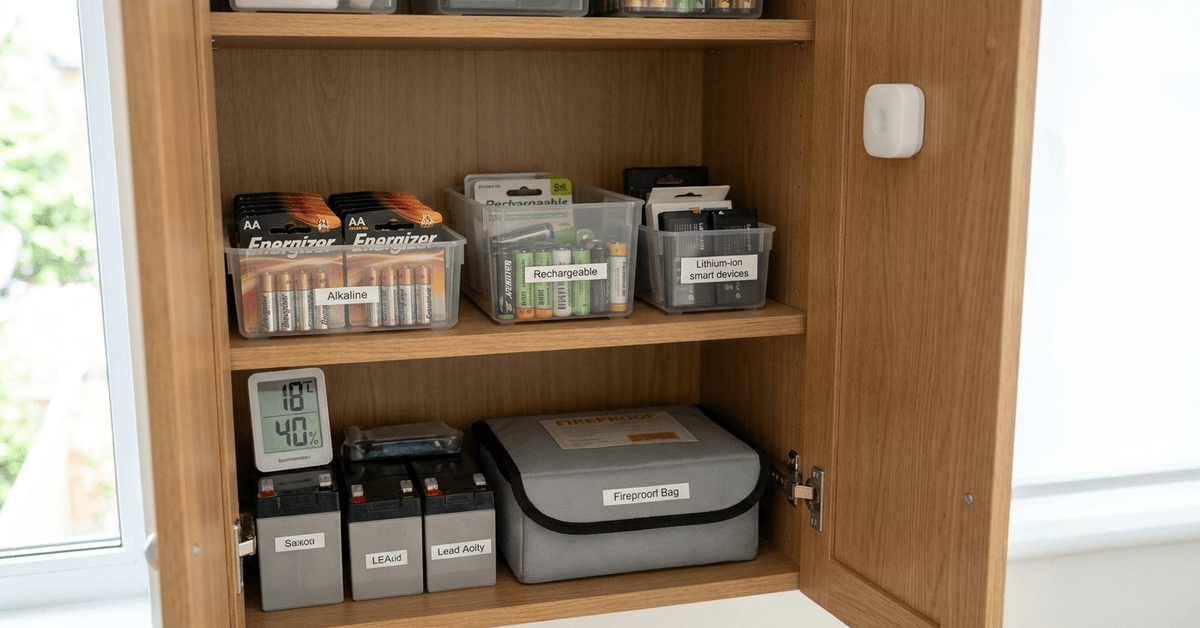
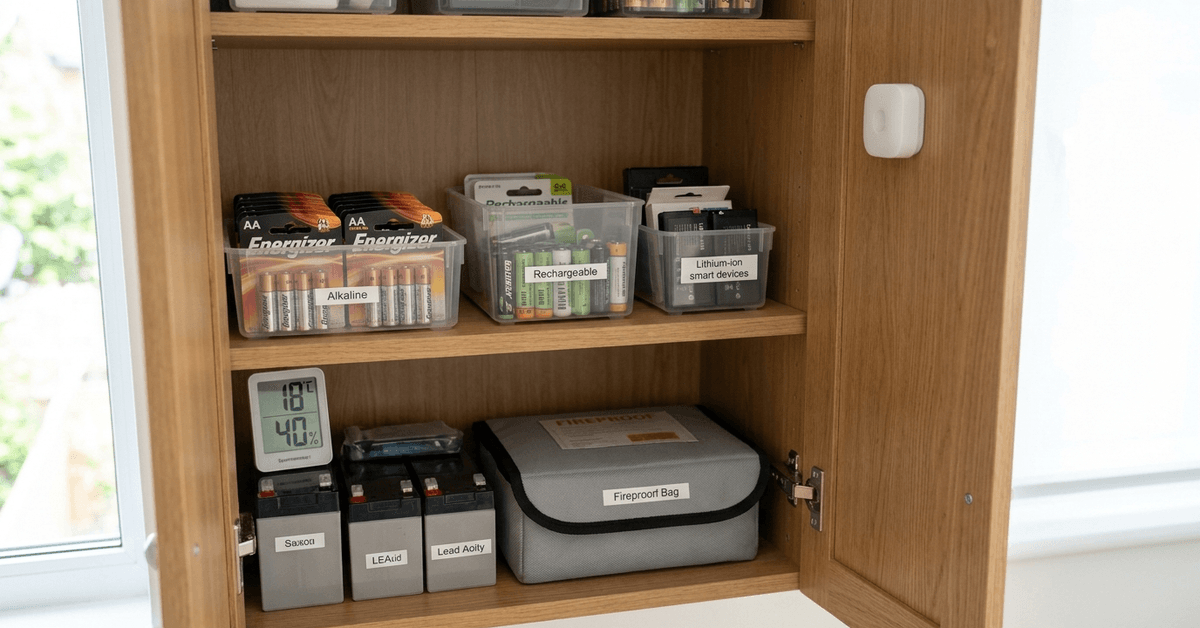
A reliable storage method is placing backup batteries in a dedicated, well-ventilated, low-humidity cabinet. This reduces interference risks.
- Store each battery type separately and label container contents
- Keep out of reach of children and pets
- Never store batteries in metal jars or drawers with loose coins, screws, or keys
- Monitor temperature—most batteries perform best between 10°C and 25°C
Some find value in using digital inventory systems to log battery purchase dates and expected shelf life, available via apps such as Sortly.
Handling Damaged or Swollen Batteries
Storing physically damaged or swollen batteries leads to serious hazards. Signs may include bulging, leaking, or excessive warmth.
- Carefully isolate any suspect batteries using a non-flammable surface, like ceramic
- Dispose according to local e-waste regulations
Recommended Storage Products and Locations
Smart battery cases and fireproof storage bags add another layer of security. Brands like DocSafe or SentrySafe produce certified containers made for battery protection.
- Select ventilated metal or fire-retardant cabinets for bulk storage needs
- Avoid storing batteries in attics, garages, or near windows where temperatures fluctuate
Many users install cabinet locks or tamper alerts for extra safety, easily integrated with smart home sensors.
Monitoring and Maintenance Tips
Routine checks keep storage effective. Setting bi-monthly reminders is a habit that helps—smart home apps like Google Keep or Apple Reminders can assist with this.
- Visually inspect for corrosion or leaks
- Test capacity with battery testers such as the Klein Tools ET16
- Rotate stock, using older batteries first to avoid past-expiry use
Maintaining a record of installed and spare batteries makes tracking easier and prevents waste.
Disposal and Recycling Guidelines
Safe disposal is important for both safety and legality. Most local utilities or electronics retailers partner with battery recycling programs.
- Never dispose of household batteries in regular trash
- Use locator tools like Call2Recycle’s recycling finder for drop-off sites
Rechargeable batteries almost always qualify for recycling. Alkaline or zinc-carbon batteries may follow local landfill rules but professional drop-off is still the safest.
Software and Apps for Battery Management
Several digital solutions exist to help families keep batteries tracked and maintained.
- Battery Guru: For monitoring lithium-ion health and charge cycles on Android devices
- Sortly: Inventory app for cataloging and organizing storage supplies
- Klein Tools ET16: Hardware tester with optional logging via app
By logging reminders or tracking charge status, battery health and backup readiness improve significantly.
Final Thoughts on Safe Home Battery Storage
Backup battery safety is foundational to secure, smooth-running smart homes. Accidents rarely happen by chance—most result from overlooked best practices or minor slips.
Storing different battery types separately, keeping them cool and dry, and inspecting them regularly prevents the most common risks. Smart storage cabinets, fireproof containers, and digital tracking apps all add valuable layers of security.
In the end, an organized approach is the best safeguard for your investment in smart home technology. Safe battery storage means peace of mind and round-the-clock home protection.